Showing posts with label trees. Show all posts

Thursday, May 9, 2013

Tree Architecture in Lincoln Park

The definition of "architecture" I am using here is from Halle, Oldman, and Tomlinson's classic Tropical Trees and Forests: An architectural analysis (1978) see here.  Architecture is "the visible, morphological, expression of the genetic blueprint of organic growth and development." 

A good place to start getting you eye trained to look at the architectural patterns of trees is the Lincoln Park Conservatory!


Notice below the way in which space is densely filled in the conservatory. This emerges for a variety of reasons, one of which is that there is a greater number of architectural models expressed in tropical vegetation.  This allows for a greater occupation of space for tropical vegetation.


Tropical forest hosts many palms which are characterized by their single trunk often with a single apical meristem.  Rare to find these in the temperate zone.


Contrast these conservatory pictures with tree vegetation in the park outside.  Architecturally there are fewer models represented.  As far as I can tell there has not been much done work done to assess the diversity of these forms in the urban environment.


Oz Park, where there is an attempt made to add a nice understory to the urban forest.


The model analysis can be applied to vegetation other than trees.  Here is a liverwort with some nice branching patterns.


Wednesday, May 1, 2013

Springwatch Chicago, 2013...continues


Honey Locust getting ready... not quite there yet.


Linden delicately unfurls.... however....


Some Linden leaves have thrown caution to the wind and are out!


Magnolia pinkly heralds forth


Bradford pear blooming in strenght


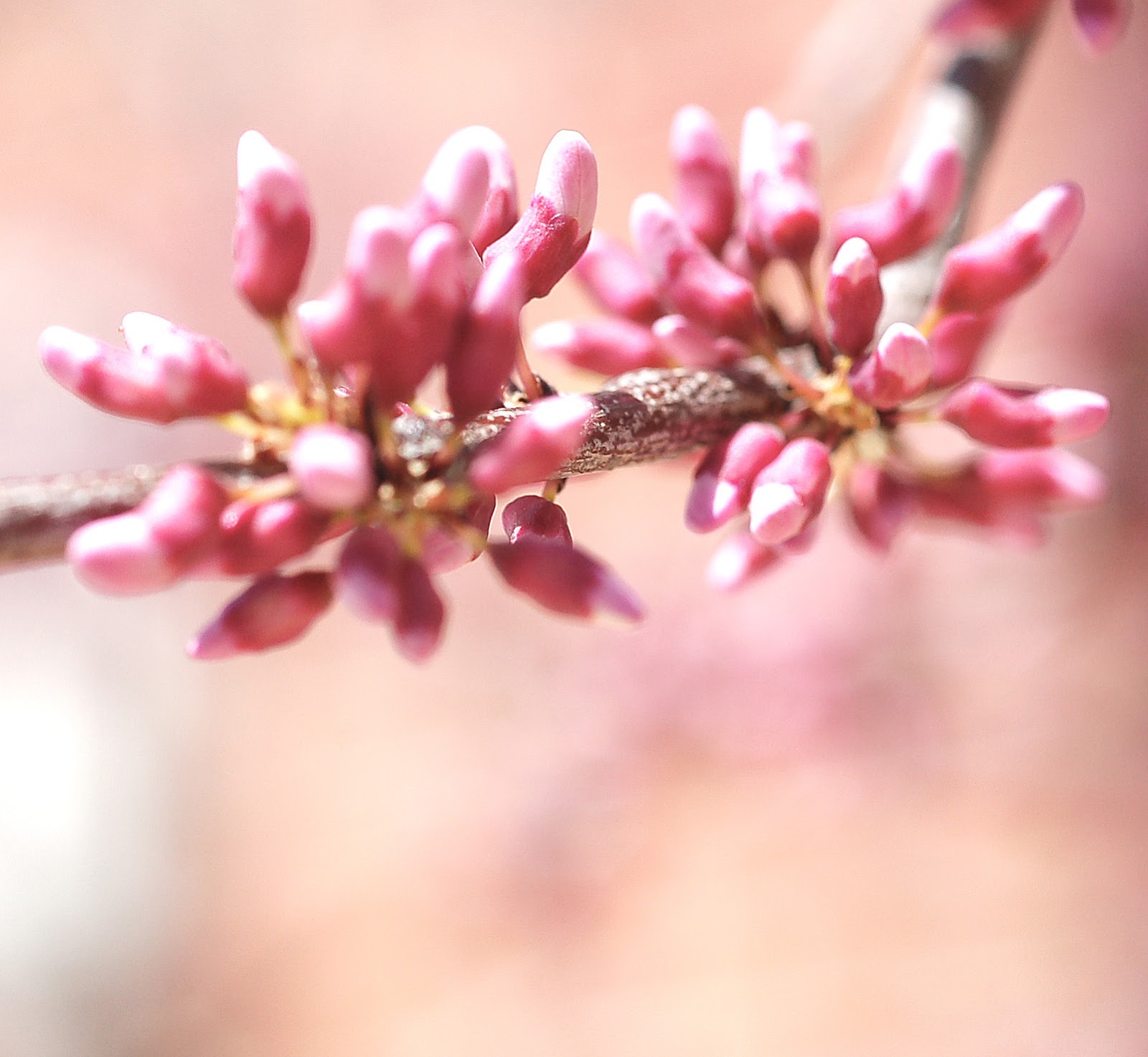
Redbud clustering about the twig like pink soldier ready to deploy.


Redbud... flowers, as always, getting the jump on the leaves.


Remember your silver maple (shaggy barked)...


...slightly exhausted from the effort


Sliver maple flowering

Tuesday, April 30, 2013

Bradford pear (Pyrus calleryana) and the smell of semen

Bradford pears are about to bloom.  Tends to be a showy affair especially when they are in clusters (in Custer Av near Main St in Evanston, IL, for instance).  I can't say that I have noticed it, but to discerning nostrils apparently the early bloom smells like semen, which in turn some folks suggest smell like fish (see here).

Here's what to look for:


The bark is fairly distinctive so take a close look

Wednesday, May 9, 2012

Sky Over Lincoln Park


Some of my undergraduate urban ecologists and I spent the afternoon yesterday talking photographs of the tree canopy in Lincoln Park (in that section west of the Alfred Caldwell Lily pond and north of the Conservatory).  In all we processed 14 hemispherical canopy images (they overlapped to some extent) and calculated that in this section of the park the canopy is about 62% open (standard error of about 1.8%).  The canopy will provide even more shade as leaf-out continues. There are 2 fairly sizable sycamores there that have yet to emerge and they will shade the area quite nicely.

(The analysis was done with Gap Light Analyzer). 

Tuesday, April 3, 2012

Three Trees to ID in Chicago Area - Spring 2012

This are from my walk this morning.  Putting together a rough and ready guide for my Urban Ecology class.  The guide should have 30 species by Friday.  Let me know if you want a copy.  All of these individual trees are old favorites.  The American Elm is from in front of a friend's old house.


Saturday, March 3, 2012

Man and Tree - (A Prose Poem)

The architecture of people and plants is similarly erect; both are dominated by vertical axes.  Of course, the human animal when immobile has denser connections with plant life than just their shared verticality. The inflorescent brain of a person: like the crown of the tree; two eyes set apart like points along stout branches subtending and supporting the crown; the base of our cranial canopy is set on top of the stout trunk of neck and spinal cord.

A man firmly planted in the soil at the level of his neck would seem to flair out belowground – his appendages flailing likes roots in the deep earth – fingers and toes like adventitious rootlets fumbling through the soil. Man and plant are symmetrical friends – from crown to root, man and tree are linked by anatomical geometry.

A longer piece on tree architecture on 3quarksdaily.com this coming Monday 5th March.

Friday, October 7, 2011

Hope, resilience, sustainablity

Written at the Black Earth Institute Annual Meeting.

I can still recall the particular geometry the body needed to adopt to climb the trees in the neighborhood where I grew up.  Those trees where one could be a simple straight line and inch along a tree bole set at an acute angle to the ground, those trees where one needed to make of one legs a geometer's divider to reach from branch to branch.  I recall those which could only be climbed by swiveling around the trunk, winding up the tree like a little human orange rind being sloughed off the fruit.  I recall too the mounting terror as I got higher and higher.  I was no John Muir atop a Douglas spruce in a Sierras' storm - I was a frightened boy who would get stuck precisely half way up a tree afraid to go further.  Afraid to go down.  And so I would stay aloft for longer than was sane, waiting for the fear to pass, waiting for that trust and hope that propelled me up the tree to return to guide me back down.

Boy, and tree, and wind, and sky; fear and trust and hope, are all world.  A tree is not theory to the climber. The limbs of tree and boy's limbs are world inseparable.  But the fear and trust and hope are also world - moods that are perhaps distinctively human; but because boy and tree are world the boys fear and hope and trust are also world.  I am fearful of world but I must accept that; I trust what it is to be human and accept that; I am hopeful and accept that.  I will climb up; I will pause in the mood of the world; and when I must I will climb down.